Friday, June 1, 2018

Parshat Beha'aloscha


Parshat Beha'aloscha: A Second Chance


This week's Parsha begins with Hashem telling Moshe to teach Aharon how to light the Menorah. Aharon set up the wicks to be tilted towards the middle wick, the Shamash.
        "Life-sized Menorah"

In this weeks Parsha we learnt a very important lesson. There was a group of Yidden (Jews) that were not able to bring the Korban Pesach because they were Tamei. They were upset and complained to Moshe that they weren't able to bring the Korban Pesach. Hashem told Moshe to tell them that they have a second chance and they could bring the Korban Pesach on Pesach Shaini. Pesach Shaini was a month after Pesach when these Yidden became Tahor (spiritually pure).
We can learn from this that just like Hashem gives us a second chance we can also give our friends a second chance. So if a friend does something wrong or hurtful to us, we should give them a second chance to make it up.  

The Leviim had different jobs in the Miskan. One of the jobs were to play instruments and sing. In our class we practiced playing instruments to different types of beats and had so much fun! 
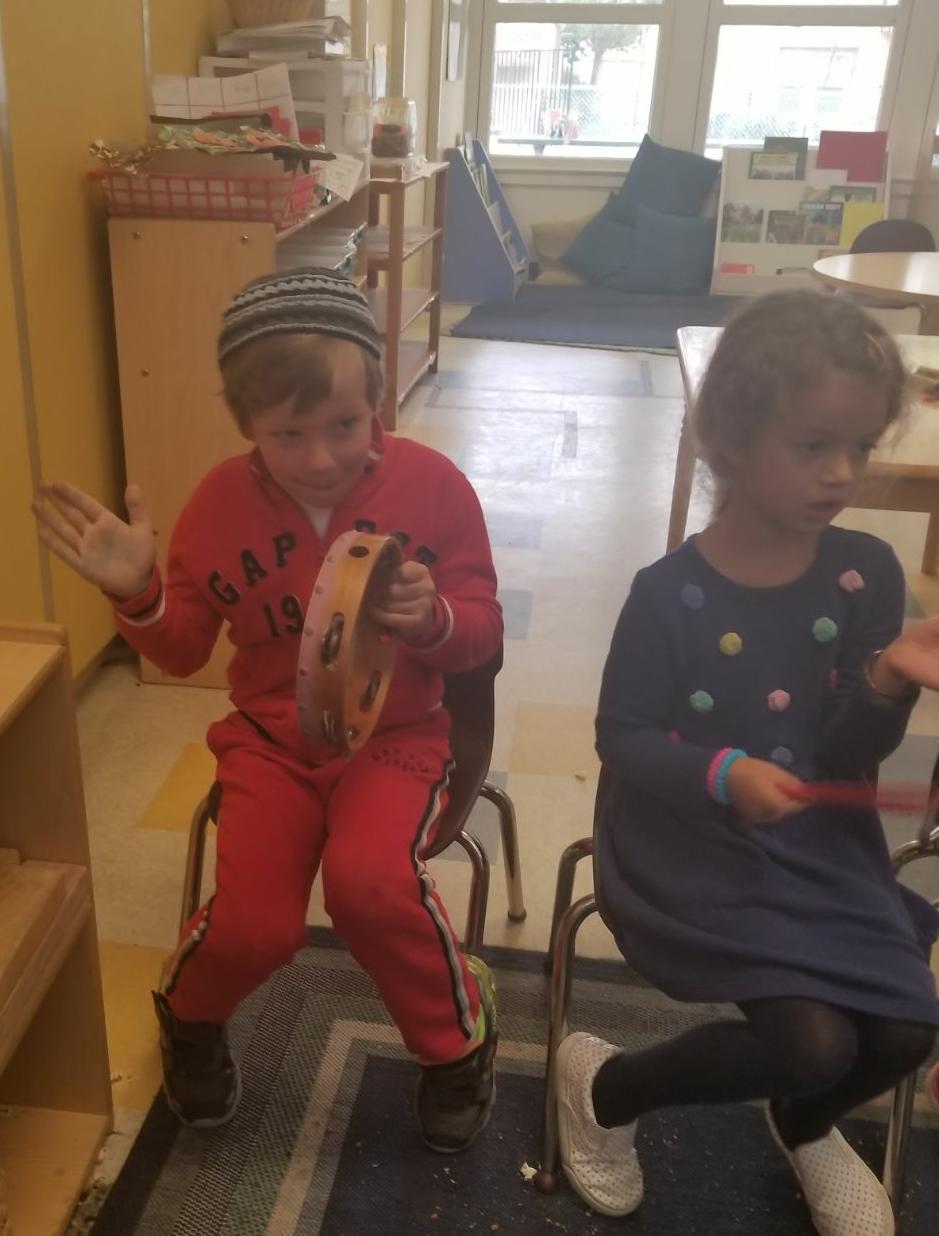


Listening to harp music and practicing body control.

The harp was one of the instruments that the Levi'im played in the Mishkan


We learnt in the Parsha that the Yidden traveled for the first time since receiving the Torah. 
The Yiddin were protected in the dessert by the "Cloud of Glory". There were 6 clouds: one on top, one on bottom, and four around on each side. 
Devorah Leah is trying to figure out were the clouds were.


Levi Yitzchak practices reading and writing Hebrew. 
First he read the card and then he wrote down the word.
Everyone's handwriting is getting so much neater!


Material Math

We are beginning our unit of adding with larger numbers, 
and using our beginning skip-counting skills.
 Malka strings some beads on a pipe cleaner 
to make sets of 10, 5 and 2.


Max points out how many sets of 10,5, and 2 
we need to make the number 67


Menucha and Muka practice using 10's 
combined with other numbers to mach the number card to the right amount of beads.


Combining calendar with reading, 
During a word hunt.
Muka proudly highlights the word Wednesday.


Working with Fuse Beads tests our fine motor skills... and our patience!


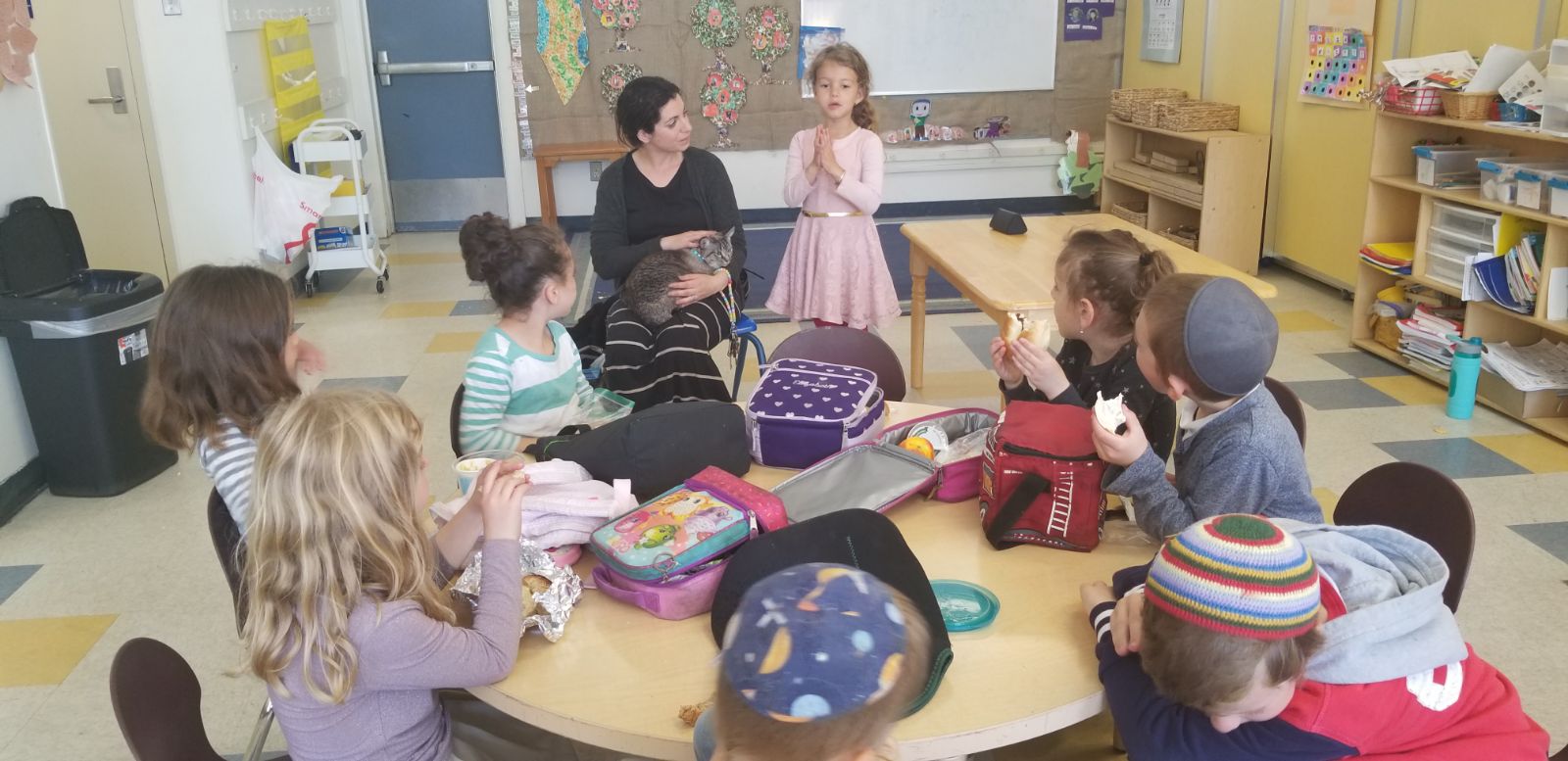
We were so lucky to have Elizabeth's Mommy come into our class and teach us about cats!
All parents are invited  to come and join us and teach us something new.
Thank you Morah Rachel!!


Wednesday, May 30, 2018

Torah Tots learning anger management and calming techniques!


Anger is a normal healthy emotion. What we do with our anger and frustration is an important skill to learn early on in life to create healthy habits.
Dovi and Evan role playing what makes them angry and showing us their angry faces.


What can we do when are angry?


 We used the Stop Light Method.
Stop. Think. Act.
Learning how to stop and think (of how to deal with the frustration) VS immediately reacting is a skill we need for life! 


Hannah telling us what makes her really upset. As a class we thought and came up with our 'green light' solution!


  We used this method throughout the week and it really helped the children work out their own problems.


 Motty creating his own stop light sign and writing the words himself.


Breathe in and out

It is so important to get enough oxygen into our system. A flower (smell-breathing in) and a candle (blowing out the 'fire')  helped our friends practice deep breathing. Throughout the week we encourage the children to BREATHE. This helped especially when they were sad or upset.


Making a take home version to help with deep breathing. Batya smelling the flower and blowing through the tube.


Morah Avigail shared with us a great calming technique that showed wonders for some of our friends.
A grid from 1-10 with a sad face becoming sadder as the numbers went higher helped the children      differentiate what is something small that we can move on from or something that requires more problem solving. 
Saige showing another technique of how she drew her sad scenario 10 times on a paper. By the 10th time she was able to talk calmly about what happened and even came up with her own solution!


Calming basket

A basket filled with different sensory input objects. We also placed the flower and candle from circle time for children to practice their deep breathing.


Moshe found magnets in the calming basket.

Ari started off circle time with something bothering him. It was challenging for him to verbalize what he needed. We passed him a balloon filled with flour from the relaxing basket. It was a great way to calm down  and verbalize what he needed.


Cornstarch and water is one of the most calming and therapeutic sensory experience. 
When using fast motions the texture is firm, when using slow motions it dissolves and melts. 


Relaxing Yoga!


Quiet space centers


Centers that require concentration are a great way to re-focus and calm ourselves.
Evan sitting at a beading table that only had one chair to create his own space.
Dovi using many different materials to push through pool noodles. This was a great activity for fine motor skills as well as concentration. 


Dramatic play creates so many opportunities to practice our self- control.


Sweet moment of the week..

Mendel being sweet and helping out Batya!


Friday, May 25, 2018

Parshat Naso- Everything has a purpose!


The children were so excited to come back after receiving the Torah. In this weeks Parsha we learn about the donations of the Nesiim. One of the donations was six wagons that were used for carrying the beams of the Miskan. We learnt that the beams exactly fit on the wagons.

Why didn't the Nesiim just give more wagons? Couldn't they be more generous?
We learnt that everything in the Mishkan had a purpose and nothing was wasted. The same applies to us. Every part of our body and all of our energy has a purpose and should be used to serve Hashem.

We internalized this message in class through a game. Morah Avigayil put out drawing of different parts of the body like hands, legs, mouths etc. She also put out different Mitzvots like Mezuzah, Shabbos Candles, Shofar etc. The children then matched the part of our body to the Mitzvah it fulfills.


Max is working with his mom on connecting the pictures of the Mitzvos to the right port of the body.


Here we are playing another game to learn how to use our time to do Mitzvot. The children walked around the classroom and when the Morah said stop the children stopped and listened to the part of the day that the Morah announced. They then shouted a Mitzvah they can possibly do at that time of the day. For example when the Morah announced "Morning" one of the children shouted "Modeh Ani".


Practicing our sight words.

We used trays filled with salt as a different medium to encourage writing.
The children were so enthusiastic to write the sight words they knew!


Elizabeth is hunting for the sight words Morah Davina hid in the salt. When she found the words she read it out loud.


We played a game to practice combining multiple sounds to create words. Morah Avigayil voiced the sounds while the children were invited to merge them.  They voiced it out while bringing their hands together with a clap.


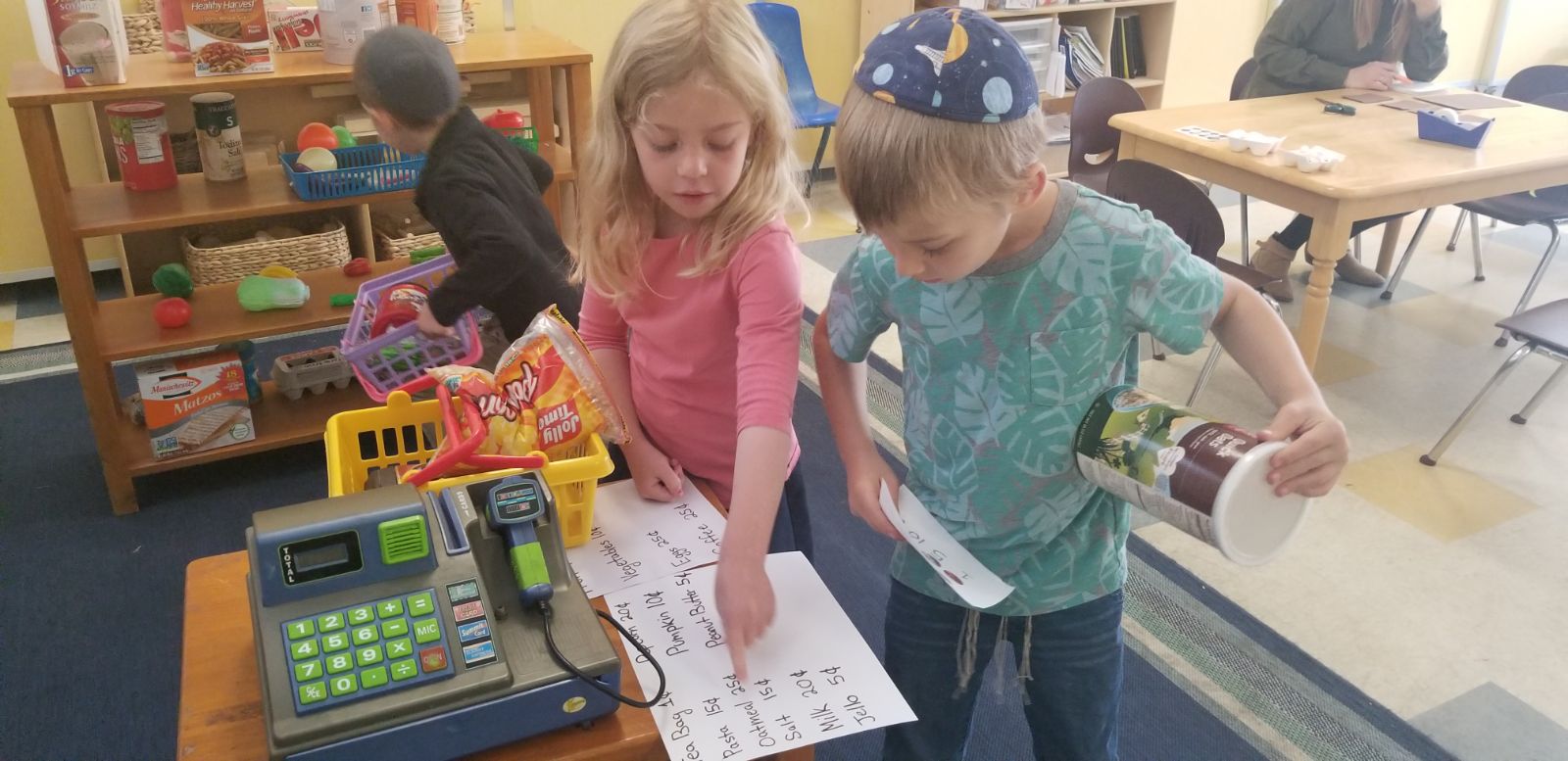
Play store-- to sharpen our math!


The children took turns working as a cashier ,  adding up the different coins. They learned how much each coin is worth and how to add them. They also practiced subtraction by calculating the right amount of change to give back.


Wednesday, May 23, 2018

Torah Tots learning about emotions and self-control


This week we focused on our emotions and feelings. It is important to know we have many kinds of moods. To be able to verbalize what we are feeling and give validation is a crucial skill to have in life.
We started this off with our 'How are you feeling today" chart. 


After circle time we placed this chart on our back wall for the children to update their feelings! It was fascinating to see how many times the children's moods changed.

Our Many Faces

Circle and markers was a fun way for the children to illustrate different feelings and expressions they have. A mirror helped them see what their face looked like while having a particular feeling.

Bela Riva made a sad face which reminded her about when she was sad while being sick in the car.
This was a great way to remember and communicate the different feelings we have.


Mina "My mad face."


 Rozie (after checking her angry face in the mirror) "My nose looks bumpy when I'm angry." What a great observation! It made some of us want to recheck the mirror to see what our faces do when were upset.


Menachem "I feel shocked sometimes at Arik"


What makes YOU happy?

It is important to recognize the things that put us in a good mood or feel happy. The children were invited to add what made them happy to our easel.
We then took it to the next level by understanding how each person is unique and different in what makes them happy. Mina reviewing the pictures of her friends answers.
It is quite a challenging but important skill to know how someone else feels happy and that might not be the same as you.


During our many circle times this week, when talking about different feelings we had a big mirror for the children to check their own facial expressions and to see how they were feeling.

Batya, after checking herself in the mirror, gave a big skip and let us all know she was excited today!


Moshe using different materials to create his happy face.


Motty had fun building faces.


Rozie and Hannah playing with Mr. potato head as a way to show different feelings.


As the children were 'trying on' different mouth expressions they noticed their eyes changed!


These masks also helped us role play how to help someone who is feeling sad. Ari saying kind words to Shayna who was pretending to feel sad.

 Emotions head band game

Each child had a turn to wear a different emotion picture on their head. Without looking at the picture they had to guess which one they got by looking at their friends facial expressions.


Self control

It is okay to be mad or sad sometimes but what do we do about it? Next week we will focus on how we should respond when we are angry. To prepare for this we did many activities to help with self control.

Why is self-control so important?


Self-control is not a skill most preschool children have mastered. However, many professionals  believe that it is a strong indicator of kindergarten readiness. After all, kids need self-control to be able to sit still, pay attention, follow directions, and control their impulses.


Each color representing a different physical action helped the children practice self- control. 
Hannah holding up yellow which meant tiptoeing. It was challenging at first when some of the children wanted to run up to her and get there first!


Musical instruments during davening circle was a great way to practice self-control. At the end of each song when the Morah holds up a fist that signaled to stop their music.