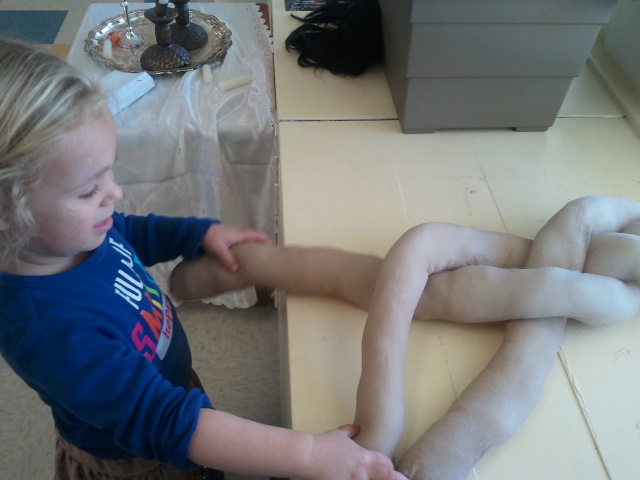
Baking with Kids

Remember
your first experiences in the kitchen? Maybe you helped your mother
measure sugar for a cake, or stirred that big wooden spoon until your
little arm ached. (Maybe you just licked the beaters!) The warmth, the
aromas, and the teamwork all fused into lasting, loving memories.
Now you can re-create those happy moments with your own children,
grandchildren, or nieces and nephews. Baking with children is a
wonderful way to teach, share, and connect. And when you’re finished,
you can have dessert!
Why Bake?
Besides creating delicious treats, baking gives kids the opportunity to:
- Learn real-world math. Measuring teaches
fractions. Cutting brownies or a cake into servings demonstrates
division. And waiting for the oven buzzer helps kids understand units of
time.
- Develop patience and precision. If you mismeasure or skip a step, your baking project will disappoint.
- Improve reading comprehension and vocabulary. Recipes are good practice for other kinds of instructional reading.
- Cultivate scientific curiosity. What makes a cake rise? What happens when you heat chocolate? Kids love baking “magic” and the explanations behind it.
- Organize and follow through. From shopping for ingredients through cleaning up, baking projects show kids the value of doing a job properly and thoroughly.
How to Get Started
 Basic Equipment
- A set of plastic or metal measuring cups for dry ingredients
- One or more glass measuring cups for liquid ingredients
- A set of measuring spoons
- Rubber or plastic spatula
- Several wooden spoons
- Rotary beater (the classic “eggbeater”)
- At least three sturdy glass or metal mixing bowls
- Cookie sheet(s)
- Round or square cake pan
- Oven mitt and hot pad
- Apron
Baking success starts with appropriate expectations. Give kids jobs
suited to their abilities, and praise them generously when they complete
a task. Make sure each baking experience is a positive one, even if the
results aren’t quite what you expected!
Children as young as two or three can participate in simple baking
activities such as pouring, stirring, and decorating. By five or six,
kids enjoy measuring, making cookie-cutter shapes, and using a rotary
beater. At nine or ten, most children have the coordination to operate
electric equipment such as blenders and microwave ovens and the reading
skills to understand recipes.
For your first project, choose a recipe that uses familiar
ingredients—sugar, eggs, flour, butter, chocolate chips—and basic
techniques such as blending, stirring, and spooning. Many cookie batters
can be “squished” with the fingers (much easier for kids than stirring
with a wooden spoon). Brownies can be mixed, baked, and eaten out of the
same pan to minimize cleanup.
Safety First

It’s
natural to worry about safety in the kitchen. But with a little
instruction, kids can learn to respect safety guidelines without feeling
anxious or fearful.
Sharp edges and hot temperatures are a parent’s top concerns. Don’t
let young children use sharp knives, and don’t let them use the burners
or oven until they’ve had plenty of experience around the kitchen.
As you work with the range or oven, explain to your child what you’re
doing and why. Show how to check that burners and oven are on or off.
Always make sure that pan handles are turned away from the edge of the
stove, so they can’t get bumped into by accident.
Other important precautions:
- Knives. Even older children (ages 8 – 10)
should be supervised when they use knives. Make sure knives are properly
sharpened; a dull knife is more dangerous than a sharp one. Emphasize
that knives are not toys. For most baked goods, a serrated plastic knife
works just fine and is much easier and safer for kids to handle than a
metal knife.
- Burns. There’s no getting around the fact that
baking requires heat, and heat can cause burns. Set a good example for
young children by always using oven mitts or potholders when opening
oven doors, using the range, and handling baking pans or cookie sheets.
As they mature, allow them to do these chores while supervised.
- Falls. Kitchen falls can be prevented if we
remind ourselves that children are shorter than grown-ups. If kids can’t
comfortably reach the countertop or kitchen table, have a sturdy stool
or booster seat available.
- Basic hygiene is one of the most important
precautions you can follow. Wash hands with plenty of soap and water
before starting and after finishing your baking project. Make sure hands
are thoroughly dried when handling utensils, so you can maintain a good
grip.
A Word About Mess
It’s inevitable with beginners. Here’s how to keep it to a minimum:
- Spread newspapers over tables or countertops to minimize sticky messes.
- Wear an apron. Small children can wear one of your old T-shirts over clothing.
- Teach kids to clean as they go (and set a good example yourself).
- Keep your temper…and your sense of humor.
CREDIT: http://www.dominosugar.com/family-fun/baking-with-kids